System of Action vs.
System of Intelligence
Google Cloud just announced the “Agentic Data Cloud.” It validates an architecture shift we've been building toward for months, and changes how every business should think about their technology stack.
Google Cloud just published Architecting the Agentic Data Cloud, and buried in the marketing is a genuinely useful framework. They identify three shifts happening right now that every business needs to understand, not because they're theoretical, but because they describe the architecture we've been living in production for months.
The Three Shifts Google Identified
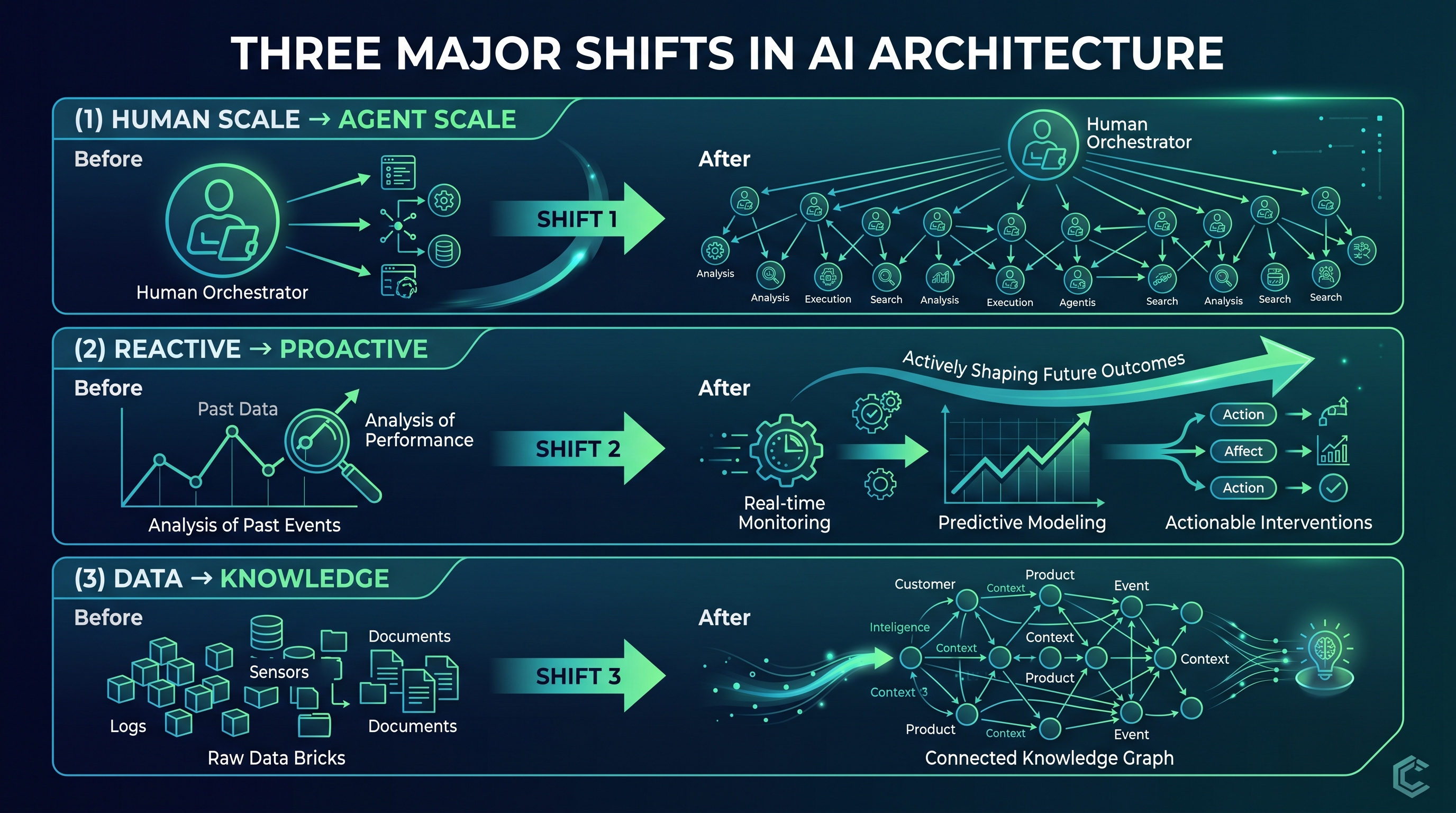
Human Scale → Agent Scale
Your data platform now needs to support always-on, high-velocity, autonomous operations. Agents monitor and operate your business 24/7 at digital speed. The practitioner becomes an orchestrator, not an operator.
Reactive → Proactive
Previous architectures told you what happened yesterday. Agents execute in the moment and shape the future. "The goal is no longer just to know. The goal is to act."
Data → Knowledge
Raw data isn't enough. Agents need a knowledge flywheel: understanding relationships, semantics, and usage patterns. Without context, they hallucinate on bad data.
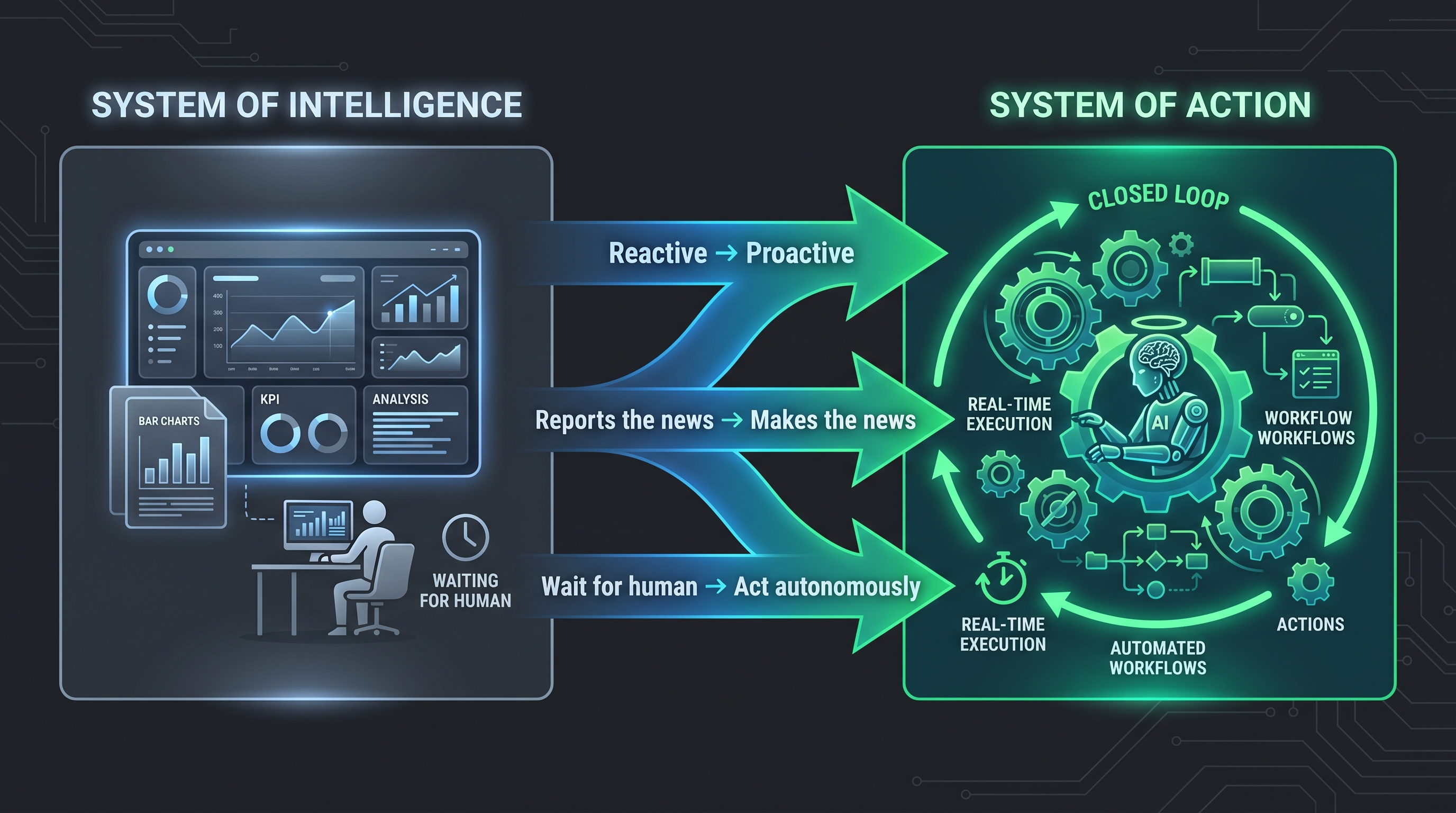
System of Intelligence vs. System of Action
Google draws a sharp line between two architectures, and this distinction is the most useful thing in the entire paper:
System of Intelligence
The Last Generation
- ✗Reports the news. Waits for a human to ask a question.
- ✗Sits as a prediction in a forecasting model, waiting to be acted on.
- ✗Reactive by design. Dashboards and alerts.
System of Action
The Agentic Era
- ✓Proactive. Operates on your behalf.
- ✓Merges analytical insights with transactional power in one seamless loop.
- ✓Your data doesn't just tell you there is a problem. It actually fixes it.
Why Most Architectures Break at Agent Scale
Google identifies four structural failures that kill agentic systems. These are worth checking your own stack against, because at agent scale, they're fatal.
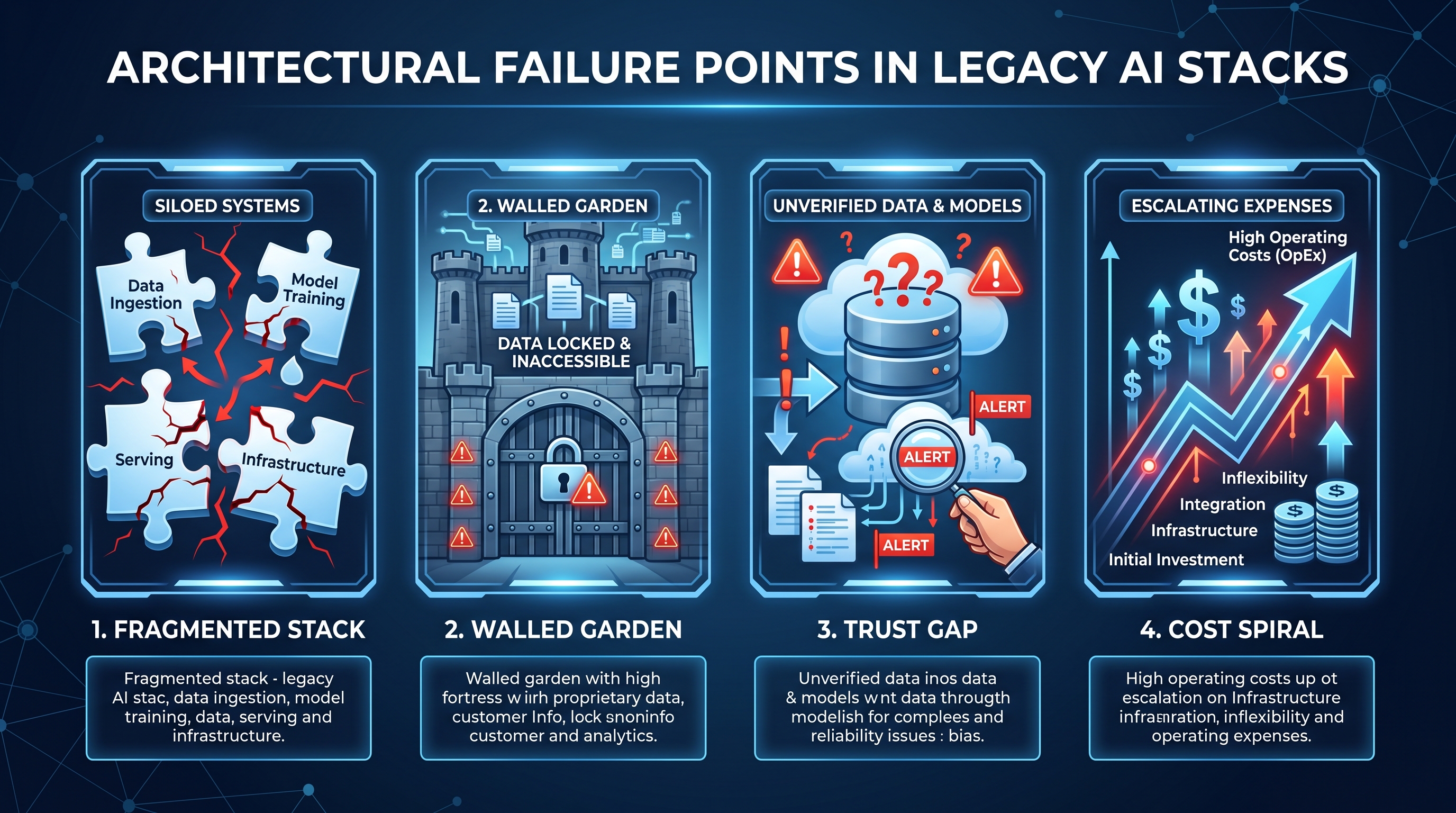
Fragmented Stack
When your data platform is glued together from disjointed parts, agents can't form a complete picture. Every seam is a failure point under agentic load.
Walled Gardens
Vendors demand you move everything into their ecosystem. When you do, your security perimeter dissolves. Access controls, identity management, and lineage get left behind.
Trust Gap
A catalog that says where things are isn't enough. Agents need rich context: what data means, relationships between data, how it's used. Without this, agents produce invalid outcomes.
Cost Spiral
At agent scale, AI should be your greatest asset, not an unpredictable financial liability. Fragmented stacks explode costs under agentic workloads.
What We're Building at Prospyr
Here's the thing: the big cloud providers describe this as new. But if you've been paying attention to the actual builders, the people deploying multi-agent systems in production, this framework describes what we've been doing for months. Google's paper validates the architecture we built from first principles.
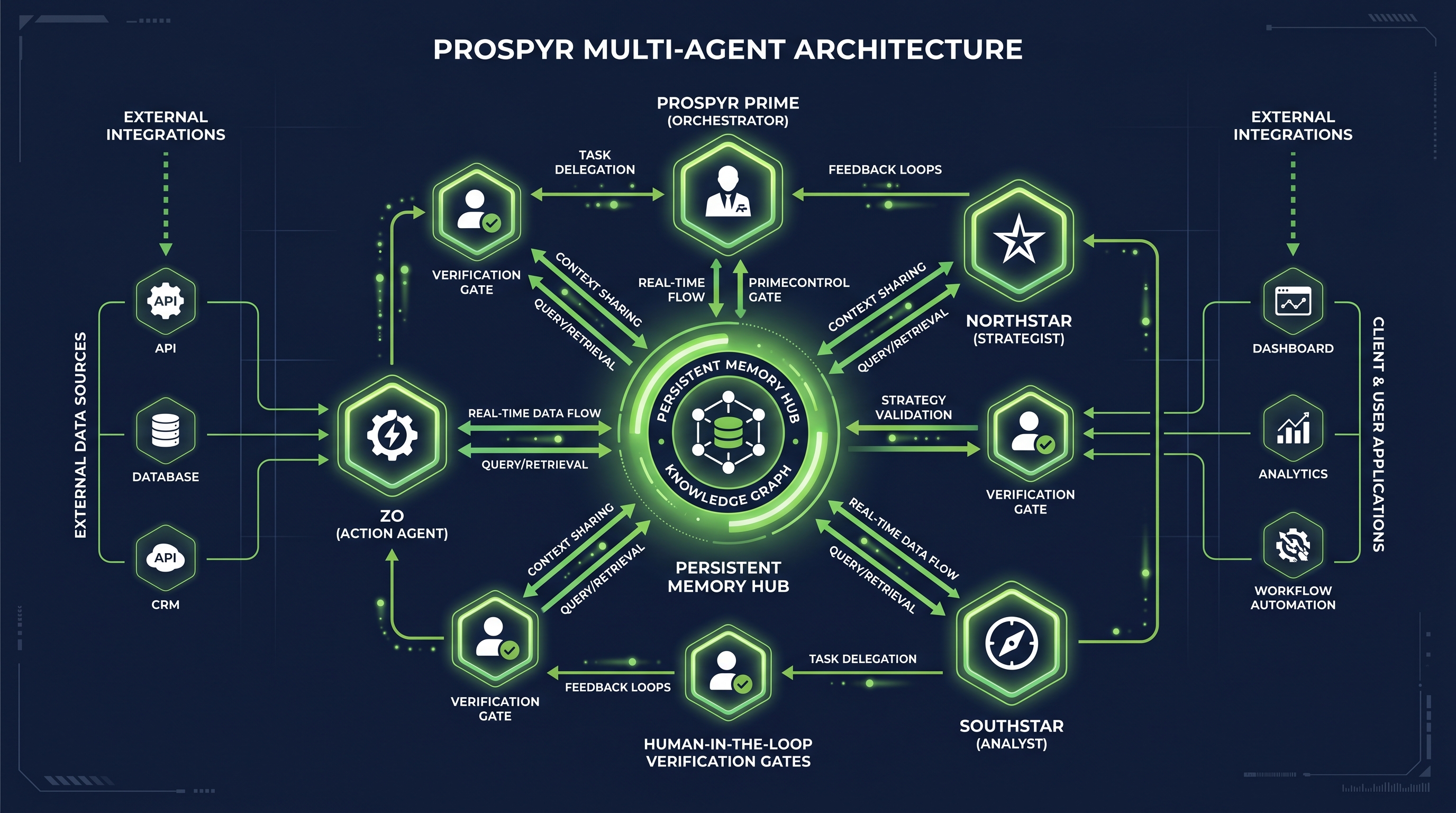
Multi-Agent by Design
Prospyr Prime, Northstar, Southstar, and Zo aren't a single chatbot with tools. They're specialized agents with distinct roles, persistent memory, and coordinated execution. Each agent owns a domain. They delegate across extended workflows. This is System of Action architecture: agents don't surface information, they execute.
Memory as Architecture
Every agent decision, client interaction, and project update flows through a persistent memory system. Daily logs feed into long-term memory. Long-term memory shapes future decisions. This is the knowledge flywheel Google describes, implemented with structured markdown and Obsidian, not a proprietary data lake you can't escape.
Trust Through Human-in-the-Loop
Every system we build includes verification gates. The DWC Wage Automation tool requires human review before generating state-compliant legal forms. The ALCC lead pipeline sends real-time notifications but lets humans triage and qualify. Agents propose, humans verify. Trust is architecture, not a compromise.
Dark Data Activation
Google notes that 90% of enterprise data is unstructured, locked in contracts, emails, PDFs, and images. Our pipeline combines Browser Use (for web-based data sources), LangExtract (for document intelligence), and multi-agent orchestration to activate dark data at scale. This is how we turn unstructured chaos into agent-accessible knowledge.
What This Means for Business Owners
If you're evaluating AI for your business in 2026, the System of Intelligence vs. System of Action framework gives you a clear lens:
Does it report, or does it act?
If it only tells you what happened, it's a System of Intelligence. Useful, but last-gen.
Does it have persistent memory?
If it starts from scratch every session, it's not agentic. Memory turns a chatbot into an operator.
Where is the trust boundary?
Autonomous action requires verification. Good systems design this in from the start.
What happens at scale?
A system that works for 10 transactions might collapse at 10,000. Agent-scale architecture is a different discipline.
The businesses that win the next five years won't be the ones with the best dashboards.
They'll be the ones that architect systems that act.