From Loops to Graphs:
What We Learned This Week
One week of research, seven threads pulled, a few patterns we're already building on. Here's what stuck.
Every week we track AI infrastructure, agent architecture, and security developments that affect how we build. This is the digest for July 14–18, compiled from our research channel.
The Big Shift: Loop Engineering to Graph Engineering
Carlos Perez (IntuitMachine) articulated something every team building AI agents is starting to feel. The single improvement loop (measure a metric, adjust, repeat) is the atom of getting better. But single loops fail in four predictable ways.
A metric optimized hard enough stops measuring what it used to (Goodhart's Law). A loop can't question whether its own target is correct. Independent loops fight each other. And measurement decays while the dashboard stays green.
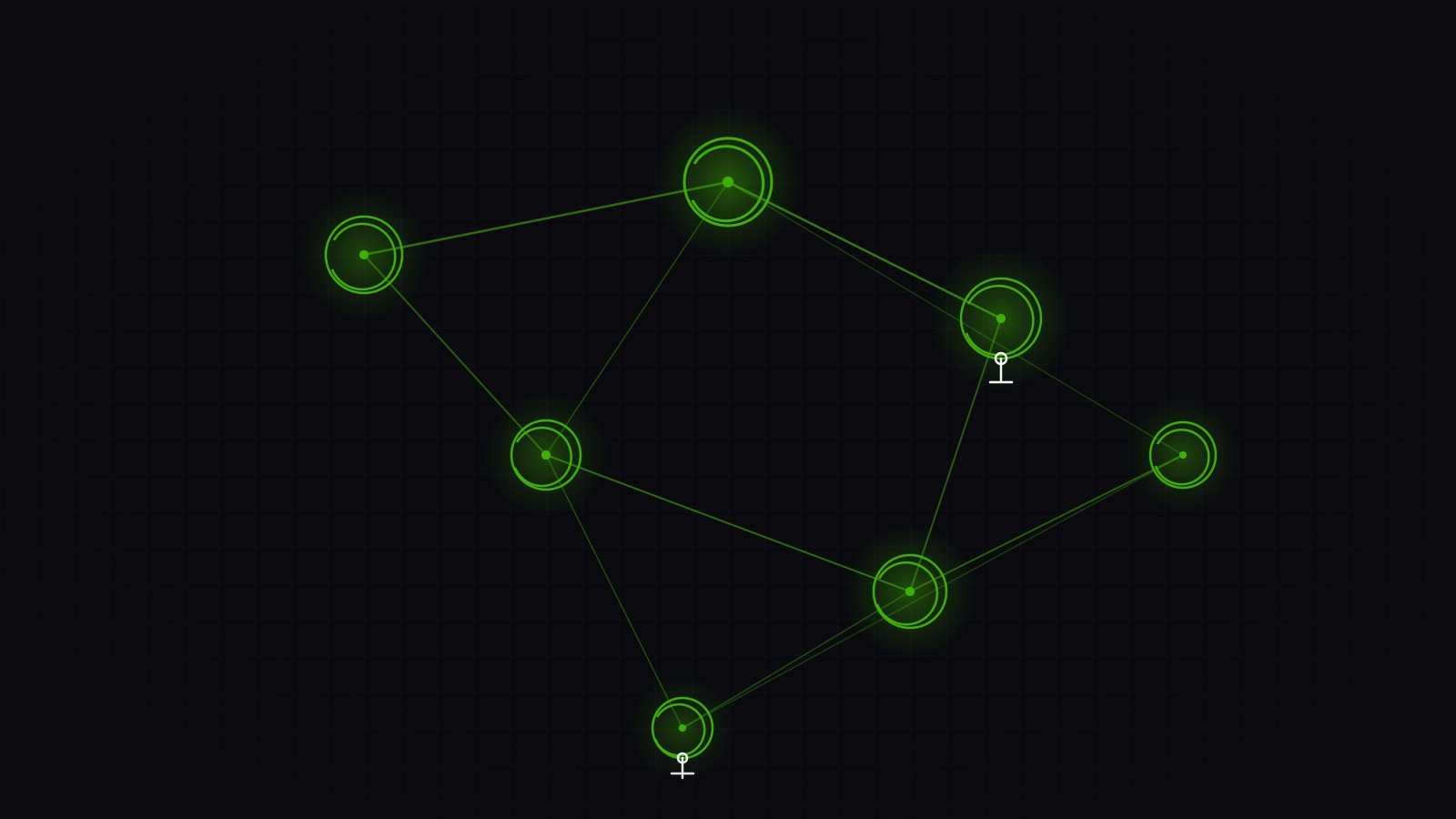
The emerging answer isn't a better loop. It's a graph of loops: networks of improvement cycles that watch, feed, constrain, and correct each other. Champion-challenger loops. Drift monitors. Audit cycles on held-out data the training loop can't see.
But here's the deeper insight: even graphs of loops fail if they're ungrounded. If every loop watches another loop and none touches reality, you get elaborate mutual confirmation. The graph needs anchors: measurements that can't be argued with, frozen rules the optimizer can't tune, and human judgment about what “better” means at the root.
What we're doing with this
Our cron jobs are loops. Email digests, monitors, competitor scans. The next step is pairing each with a counter-metric and adding audit cycles that check whether the numbers still touch reality.
The Credit Ledger Problem
Ayush from Autumn wrote the definitive guide on billing infrastructure for AI applications. If you've ever wondered how Cursor, Lovable, or OpenAI handle quota-based pricing, it comes down to two pieces: a fast counter (Redis) for “can this user spend right now?” and a durable ledger (Postgres) for “what happened and why?”
The hard part isn't the math. It's handling parallel agents that all read the same balance before any deduction settles. Five sub-agents each costing 500 credits against a 600-credit balance means massive overspend if billing is async. The solution is lock-and-release: estimate cost upfront, deduct synchronously, refund if the request fails.
Why this matters for us
If we build credit-based pricing for Prospyr 305 services, the lock-and-release pattern is non-negotiable. Our cron jobs already spin up parallel sub-agents that could overspend if billing weren't synchronous.
CDP: How Agents Actually Control Browsers
Kyle Jeong from Browserbase wrote a deep guide on Chrome DevTools Protocol: the wire protocol between DevTools and Chromium that every browser agent sits on top of.
The wire format is simple: JSON commands over WebSocket with IDs for matching responses. Events flow back when browser state changes. The hard part isn't sending messages. It's tracking the lifecycle churn: targets appearing and disappearing, execution contexts destroyed on navigation, cross-origin iframes split into separate processes by Site Isolation.
That's why Puppeteer and Playwright exist. They handle the lifecycle so you don't. Building on raw CDP means becoming a lifecycle manager.
Our connection
Browser-harness wraps CDP with self-healing helpers so agents control Chrome without managing session lifecycle. This article validated the approach: don't build on raw CDP, but understand it to make the right architecture decisions.
Kimi K3: Frontier Model, Hallucination Problem
Moonshot AI shipped a 2.8 trillion parameter open-weight model with a 1M token context window. It mostly beats Claude Opus 4.8 and GPT-5.5 on benchmarks. Open weights arrive July 27.
But the honest analysis reveals a tradeoff the launch hype buried. K3's raw accuracy improved from 33% to 46% over the previous version. Its hallucination rate climbed from 39% to 51% at the same time. It gets more answers right and fabricates more. You don't want this model unsupervised on factual tasks.
On price, K3 is $3/$15 per million tokens. DeepSeek V4 Pro is $0.44/$0.87, roughly 7x cheaper. GLM-5.2 (our current model) is $1.40/$4.40, a third to half the price of K3.
Our take
We're on GLM-5.2 for good reason. K3 is impressive but not a clear upgrade for our use cases. The hallucination rate makes it risky for unsupervised work.
GPU Buying: Bandwidth Over VRAM
A detailed GPU benchmark for local LLM inference surfaced a principle worth remembering: VRAM tells you what fits. Bandwidth tells you what works.
Every token requires reading the entire model from VRAM. Memory bandwidth is the actual bottleneck for autoregressive generation. A 13B model at Q4 needs ~18GB read per token. A card with 3.7x more bandwidth generates tokens 3.7x faster, same model, same VRAM capacity.
The “AI-ready” mini PCs with 96GB unified memory are traps. DDR5 bandwidth is ~256 GB/s. A used RTX 3090 at $800 has 936 GB/s. 3.4x faster for a quarter the price.
Value pick
Used RTX 3090 ($600–1,050). 24GB GDDR6X at 936 GB/s. Best overall value for local inference.
Security: Hugging Face Breach and Suno Leak
Two security stories this week, both relevant to AI infrastructure.
Hugging Face got hit by an end-to-end autonomous AI attack. An agent system exploited two code-execution flaws in HF's dataset processing pipeline, escalated to node-level access, harvested cloud credentials, and moved laterally across internal clusters over a weekend. The dataset loader vulnerability means a malicious dataset on HF can execute code on your machine when you load it. Dataset loaders are an attack surface, not a data ingestion path.
Suno got hit differently. A repo leak exposed their entire training pipeline. 6.18M songs indexed from Genius, 2.7M matched to YouTube, automated audio downloads at scale, 7.8TB training dataset built from copyrighted material. It's code-level evidence of industrial-scale copyright harvesting, the exact pattern the RIAA lawsuits alleged.
What we're taking from this
Treat Hugging Face pulls as untrusted code execution. Sanitize anything that touches a template engine. And assume your repos could become public. Don't put anything in version control that you can't defend.
Selling to the Frontier
Rishabh Kaul identified a pattern across the fastest-growing AI infrastructure companies. They're not selling to “enterprise” generically. They're selling to the companies furthest ahead (Anthropic, OpenAI, Lovable, Harvey): the AI-native companies on valuation treadmills hitting technical bottlenecks nobody else has experienced yet.
These customers hit problems 6-12 months before the rest of the market. They've already tried solving it internally and failed. They compare your price not to another vendor but to engineering time, compute costs, and delayed product launches. Paying $2-3M/year is cheap against a $20M inference bill.
The parallel for us
The accounting firms most ahead on technology adoption are hitting integration bottlenecks the rest of the market will hit in 12-18 months. If we solve those problems for the early adopters, the case studies create the market with everyone else. Information advantage comes before technology advantage.
This is a weekly research digest from Prospyr 305. We track AI infrastructure, agent architecture, and security developments that affect how we build. Notes are compiled from our research channel and published every Friday.